LAD All-Stars 1970 – 1979, Cey to Russell to Lopes to Garvey era

LAD All-Stars 1980 – 1989, the Fernando Valenzuela and Orel Hershiser decade
LAD All-Stars 1990 – 1999, the Mike Piazza era
LAD All-Stars 2000 – 2016, the Clayton Kershaw era
1970 – Billy Grabarkewitz starts off the decade with his only all-star appearance. Before Corey Seager, there was Billy Grabarkewitz who took the NL by storm in 1970.
What was a big surprise was that Billy was one of the best hitters in baseball for the first few months of 1970. He easily made the all-star team, and would even play a key role in one of the most famous all-star games in history. The 1970 All-Star game went into extra innings and is famous for Pete Rose bowling over Ray Fosse to win the game. It was Billy who singled to move Pete Rose into scoring position for that eventual scamper home on a Jim Hickman (ex-Dodger) single. Billy would end his all-star career batting 1.000 because that was his only all-star game appearance.
Claude Osteen was also selected in 1970 and would be the winning pitcher by hurling three shutout innings from the 10th through the 12th.
197 1- Willie Davis would be the only Dodger selected in 1971. It was Willie’s first all-star selection and by OPS his best season. This was the first time that Willie Davis was getting recognition as he also won his first Gold Glove, an award he won three straight times from 1971 – 1973 . Willie would get a hit in his only at-bat. Dick Allen was by far the Dodgers best player in 1971 but his first half (ops .811) was tame compared to his second half (ops .926) so that might have played into it. The Dodgers would trade Dick Allen to the White Sox where he would win the MVP in 1972. At least they got back Tommy John. Al Downing went 20 – 9 in 1971 and was 11 – 5 at the break. Certainly deserving but back then they only took eight pitchers. I’m going to have to go back and take a look again at the LAD 1971 season, they won 89 games, they finished one game back of the Giants.
1972 – HOF Don Sutton was selected for the first time in 1972. For a HOF, Don Sutton was only selected four times, and they would all come between 1972 – 1977. Don acquitted himself very well, pitching two scoreless innings.
1973 – After getting only one selection each in 1971 and 1972, the Dodgers would start a run of at least four all-stars from 1973 – 1978. Claude Osteen picked up his third and last all-star selection. Willie Davis and Don Sutton both got their second all-star selections in 1973. For Willie Davis, it would his last one. Manny Mota, Jim Brewer, and a young Bill Russell were all first-time selections. Manny Mota was 35 years old and wasn’t doing anything special in 1973 so I think he was simply added for nostalgia. Kind of strange given the Dodgers had six all-stars. Jim Brewer got his only selection and again it wasn’t close to his best season which was 1972. I think he got the call because they missed him in 1972. Bill Russell picked up the first of three all-star selections. Bill played all 162 games in 1973 and Steve Garvey was taking note. All three Dodger hurlers would pitch scoreless ball with Jim Brewer getting the save. Willie Davis made his last all-star appearance count, slugging a two-run home run off of Nolan Ryan.
1974 – The kids are here and they will dominate the all-star selections for the rest of the decade. I can simply type Ron Cey, and Steve Garvey for the next six years. This would be the first for both as the 1974 team exploded on baseball. Two key players acquired in the off-season made the team Jimmy Wynn and Mike Marshall. Andy Messersmith would round out the team. Steve Garvey wasn’t even listed on the all-star ballot but was voted in as a write-in candidate. Garvey showed the fans knew what they were doing when he collected two hits and won the MVP award. More than any other all-star game the 1974 game was a Dodger all-star game. Wynn, Garvey, and Cey batted 5th, 6th, and 7th and collected four hits in nine at-bats. Andy Messersmith started the game and Mike Marshall finished the game. This game probably deserves its own all-star write up.
1975 – In 1975 the exact same five players that made the team in 1974 made the team in 1975, while also adding Don Sutton. Garvey and Wynn would hit home runs, and Don Sutton would be the only Dodger to pitch, of the three pitchers selected. Don, once again hurled multiple scoreless innings.
1976 – Only four Dodgers made the list in 1976, with Garvey and Cey the holdovers. Bill Russell got back to the game, and Rick Rhoden made his first all-star game. I’ll say one thing. Dodger fans must have voted a lot more in the 1970’s than they do now. Steve Garvey hit a triple off of Mark the bird Fidrych which broke my heart because I’d grown to love the Bird. Rhoden pitched one scoreless inning.
1977 – Reggie Smith was traded for in the middle of 1976. In his first full season with the Dodgers in 1977, he was a tour de force leading a stacked team in many key offensive categories all while providing excellent defense in right field. As far as I’m concerned Reggie was jobbed out of the MVP award that went to George Foster and his 52 home runs. Reggie joined Garvey, Cey, and Sutton once again as all-stars. Garvey, Cey, and Sutton all started. Garvey once again left his mark on the game with a home, but this time, it was his teammate Don Sutton who won the MVP award. Sutton started, won, and pitched three shutout innings in a game that had 12 runs scored. The 1977 team was one of the greatest LAD teams of all time, and if not the best, maybe the 1978 team was.
1978 – Three newcomers cracked the Garvey/Cey/Smith all-star group in 1978. The Dodger had six once again but this time, they were Davey Lopes, Rick Monday, and Tommy John. Davey Lopes had watched his infield mates make all-star game after all-star game but this was the first time for the underappreciated second baseman. Steve Garvey would once again come through on the big stage, hitting another triple to win his second all-star MVP award.
1979 – 3/4 of the Dodger infield made the team, Garvey, Cey, and Lopes. For once Garvey would not collect a hit. Garvey and Lopes both started. For the first time since 1971, a Dodger pitcher did not make the team.
| Year | All-Star 1 | All-Star 2 | All-Star 2-6 | |||
| 1970 | | | Billy Grabarkewitz | | | Claude Osteen | | | |
| 1971 | | | Willie Davis | | | | | ||
| 1972 | | | Don Sutton | | | | | ||
| 1973 | | | Willie Davis | | | Manny Mota | | | Bill Russell, Don Sutton, Jim Brewer, Claude Osteen |
| 1974 | | | Ron Cey | | | Steve Garvey | | | Mike Marshall, Andy Messersmith, Jimmy Wynn |
| 1975 | | | Ron Cey | | | Steve Garvey | | | Jimmy Wynn, Mike Marshall, Andy Messersmith, Don Sutton |
| 1976 | | | Ron Cey | | | Steve Garvey | | | Bill Russell, Rick Rhoden |
| 1977 | | | Ron Cey | | | Steve Garvey | | | Reggie Smith, Don Sutton |
| 1978 | | | Ron Cey | | | Steve Garvey | | | Davey Lopes, Rick Monday, Reggie Smith, Tommy John |
| 1979 | | | Ron Cey | | | Steve Garvey | | | Davey Lopes |
LAD All-Stars 1980 – 1989, the Fernando Valenzuela and Orel Hershiser decade
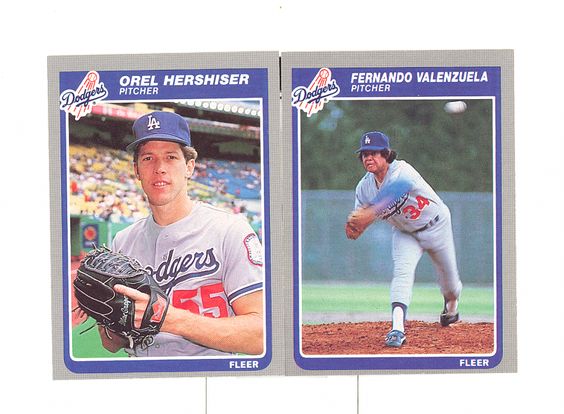
1980 – The decade started with a bang as the Dodgers hosted the 1980 All-Star game, and had six representatives, led by the historical infield with Garvey, Lopes, and Russell all making the team. All four position players started but went a combined 0 – 7. Lopes only got one at-bat before being replaced. This was clearly a case of stuffing the ballot as Lopes had no business starting the all-star game in 1980. The pitchers fared a bit better, Welch got hammered, but Ruess followed him by striking out the side in the sixth inning and collecting the win. This was Reggie Smith’s last all-star appearance. He made seven in his career and three as a Dodger. This was Jerry Ruess and Bob Welch’s only Dodger all-star selections.
1981 – would, of course, start the Fernando era and end the historical Dodger infield era. Fernando would go on to make six straight all-star games, but this would be the last time anyone of the Garvey/Lopes/Russel/Cey infield would make an all-star team as a Dodger. Garvey made eight straight from 1974 – 1981, Lopes made four straight from 1978 to 1981. Ron Cey had made six straight from 1974 – 1979 but would not make one in this decade. Cey was the best hitter on the team in 1981 but failed to make the all-star team. Somehow Bill Russell made three all-star teams but 1980 was his last one. Dusty Baker after a long career as a Dodger finally made his first all-star game. This also marked the first all-star game for Pedro Guerrero who would go onto to be the best slugger for the Dodgers in this decade. Burt Hooten always underappreciated made only one all-star game and this was it. Fernando started the game and pitched one scoreless inning. Burt did not far so well giving three runs and five hits. The other notable aspect of this all-star game is that it was not played until Aug 9th due to the work stoppage.
1982 – The 1982 team had the 1980 ROY Steve Howe, 1981 ROY Fernando and the eventual 1982 ROY Steve Sax, plus long time Dodger Dusty Baker making his last all-star game.
1983 – had Pedro Guerrero and Steve Sax along with Fernando. Steve Sax started out his career with a bang, making the all-star team in first two years, but that would be it for the hyperkinetic Sax until 1986. Sax would lead off the game and score the first run after reaching on an error and stealing 2nd. Pedro had become one of the most feared hitters in the NL by 1983, raining down a reign of terror upon NL pitchers that would not end until 1989.
1984 – Mike Marshall made his first and only all-star appearance in 1984. At just 23 it looked like Mike would join Pedro as a feared duo and while Mike would be a good hitter, except for one season in 1985 he never achieved the levels expected of him. Fernando pitched two scoreless innings in the all-star game.
1985 – was the Fernando and Pedro show. Pedro was all world in 1985, leading the NL in OBP, Slug%, OPS, and OPS+. He would not get an at-bat in the all-star game. Fernando pitched one scoreless inning.
1986 – saw Pedro break his ankle and miss most of the season. Fernando and Sax got the all-star call. This would be the last all-star game for both of them as Dodgers. Sax had by far his greatest season and greatly deserved the honor. Fernando had made six straight all-star games and was only 25, but this would be his last, so he went out with a bang. Fernando hurled three shutout innings, strike out five, including five in a row. Possibly the greatest all-star pitching performance by a Dodger.
1987 – With the changing of the guard in 1987 came Orel Hershiser. This would the first of three straight for Orel even though he should have gone in 1985. Pedro bounced in with his last big year for the Dodgers. Orel pitched two scoreless innings.
1988 – is famous for Kirk Gibson not being an all-star even though he won the MVP. Orel was the only representative for eventual World Champions and pitched one scoreless inning.
1989 – The decade closed out with the Bo Jackson all-star game. Orel made the team for the 3rd time in a row and was joined by Mike Scioscia for the 1st time. Recently acquired Willie Randolf made the team for his sixth time, first and only time as a Dodger. Jay Howell made the team for his 3rd time, but his first time as a Dodger, and the last time in his career.
| Year | All-Star 1 | All-Star 2 | All-Stars 3-6 | |||
| 1980 | | | Steve Garvey | | | Davey Lopes | | | Jerry Ruess, Bill Russell, Reggie Smith, Bob Welch |
| 1981 | | | Fernando Valenzuela | | | Pedro Guerrero | | | Davey Lopes, Steve Garvey, Burt Hooton, Dusty Baker |
| 1982 | | | Fernando Valenzuela | | | Steve Sax | | | Dusty Baker, Steve Howe |
| 1983 | | | Fernando Valenzuela | | | Pedro Guerrero | | | Steve Sax |
| 1984 | | | Fernando Valenzuela | | | Mike Marshall | | | |
| 1985 | | | Fernando Valenzuela | | | Pedro Guerrero | | | |
| 1986 | | | Fernando Valenzuela | | | Steve Sax | | | |
| 1987 | | | Orel Hershiser | | | Pedro Guerrero | | | |
| 1988 | | | Orel Hershiser | | | | | ||
| 1989 | | | Orel Hershiser | | | Jay Howell | | | Willie Randolf, Mike Scioscia |
LAD All-Stars from 1990 – 1999, the Mike Piazza era

No surprise that Mike Piazza owns this decade, being an all-star every single full season he played for the Dodgers. Plus Piazza kept on giving because Gary Sheffield continued that success by being an all-star three yeas in a row after being acquired for Mike Piazza.
I’d loved to have had exit velocity in the early days of Piazza’s career because it seemed to my naked ear that I’d never heard anyone hit the ball as hard as often as Piazza at Dodger Stadium. Until Gary Sheffield showed up.
1990 – The decade started off with Ramon Martinez earning his first All-Star appearance, and Mike Scioscia getting his second and last All-Star appearance.
1991 – found the Dodgers with an astounding six All-Stars. For five of these six that would be the only time they represented the Dodgers in the all-star game. At the time many expected that to be the first of many all-star appearances for Darryl Strawberry who was appearing in his eighth straight (seven as a Met) but instead, it was his last. Ramon Martinez is a curious case. Baseball Reference and other searches don’t have Ramon Martinez listed as an all-star but Mark Langhill the noted LAD historian with an assist from Jon Weisman assured me that Ramon was indeed an all-star in 1991
Martinez was selected to the All-Star team in 1991, but didn’t pitch because of a hip injury. He was replaced on the ASG roster by Dodger pitcher Mike Morgan. He is considered one of the six Dodger All-Star reps in 1991, along with Butler, Strawberry, Murray, Samuel and Morgan. (Strawberry was selected but due to injury was replaced by Montreal’s Ivan Calderon).
1992 – found the Dodgers with possibly their most unlikely All-Star selection, utility infielder Mike Sharperson. The Dodgers were bad in 1992, but every team has to have an all-star so Mike was chosen to represent the Dodgers.
1993 – Mike Piazza, 1994 – Mike Piazza. From 1993 – 1997 it was the Mike Piazza show. Piazza homered in both the 1995 and 1996 games and was the sole representative in 1993, 1994, and 1997.
1995 – Jose Offerman made an appearance that he didn’t deserve. Jose may have hit the ball ok in the 1st half of 1995 but he was making errors hand over fist and that was not an all-star combination. 1995 was the one year that Eric Karros should have made the team. Karros would never make an all-star team, but if he had, it should have been 1995. A trio of ROY winners represented the Dodgers. Piazza from 1993, Mondesi from 1994, and 1995 ROY Hideo Nomo. For Mondesi and Nomo that would be the only time they were selected to be all-stars. Nomo started the game and Piazza hit a home run to lead the NL to a 3 – 2 victory. Todd Worrell also made the team.
1996 – Piazza again, and Todd Worrell.
1997 -Just Piazza once again
1998 was the bizarre year that Jeff Shaw represented the Dodgers in the all-star game after being acquired from the Reds on July 4th. The game was played on July 7th, so the first time Jeff Shaw wore a Dodger uniform was at the all-star game.
Gary Sheffield continued the Mike Piazza tradition and made the team back to back in 1998 and 1999.
Here is a link to all of the LAD All-Stars.
|
All-Star 1 | All-Star 2 | All-Star 2-5 | ||||
| 1990 | | | Ramon Martinez | | | Mike Scoscia | | | ||
| 1991 | | | Brett Butler | | | Darryl Strawberry | | | Ramon Martinez, Mike Morgan, Eddie Murray, Juan Samuel | |
| 1992 | | | Mike Sharperson | | | | | |||
| 1993 | | | Mike Piazza | | | | | |||
| 1994 | | | Mike Piazza | | | | | |||
| 1995 | | | Mike Piazza | | | Hideo Nomo | | | Jose Offerman, Raul Mondesi, Todd Worrell | |
| 1996 | | | Mike Piazza | | | Todd Worrell | | | ||
| 1997 | | | Mike Piazza | | | | | |||
| 1998 | | | Gary Sheffield | | | Jeff Shaw | | | ||
| 1999 | | | Gary Sheffield | | | | |
The day that Clayton Kershaw embarrassed me at the futures game
Doesn’t seem possible that Clayton Kershaw’s futures game was almost ten years ago but father time doesn’t lie. It was the summer of 2007 and I was lucky enough to get invited to San Franciso to watch the Future’s game by a friend of mine who was headed up to see his wife’s father. His father had season tickets and they were giving us their future game tickets because no one else was interested in prospects. Jay knew I was, and when he offered us the tickets and place to stay we jumped at the chance and headed to the city by the bay.
They said we could stay at their family place, but we’d have to stay in the basement. No big deal for us, as we can pretty much hang anywhere. I basically sleep in the attic of my oldest brothers house when I visit them. I remembered the basement because when my friends oldest son had dropped out of college he had told me that Ryan was now living in his grandfather’s basement in San Francisco. I, of course, imagined a small house with a tiny basement, cramped quarters, and felt bad for Ryan. Yeah right
We arrived the night before and when they showed us to our quarters, we couldn’t help but laugh. Unbeknown to us, that side of the family was loaded, and the resident was right smack in the middle of one of San Fran’s best locations, the place had three or maybe even four stories, The “basement” was the final floor and it was “only” about 2,000 square feet and still had a view of San Francisco. It was the best place we ever stayed anywhere in our life.
I was especially excited because Clayton Kershaw and Chin-Lung Hu (future game MVP) were the Dodger future game representatives and even then I knew Kershaw was something special.
First I hit the festivities and highlighted my stay by beating SF fans at SF trivia and won a Dodger bear which I backpacked to AT&T park to meet my wife.

We got to our seats which were right behind home plate. I was a tad obnoxious, being surrounded by SF fans you have to remember the time. The SF Giants had never won a World Championship, and we had five under out belts. So when anyone taunted me they didn’t have much ammunition. My gun was loaded with Kershaw bullets, Best this, best that , blah blah blah. I’m sure they hated me. When Clayton got up to warm up along the left field line, I left my seats to watch and got some nice shots. It was the first time I ever saw Kershaw close up, and man was he young.
When he came in I headed back to our seats to watch the wonder kid. What I got instead was watching Clayton Kershaw give up his first professional home run. The fans around me poured it on, and rightly so. I deserved it. I had to good-naturedly take it, just as they had good-naturedly listened to me brag about the Dodger wonder kid who was going to take the NL by storm. It ended up being a humbling day, and I’ve never quite forgiven Clayton for embarrassing me that day.
Though multiple Cy Youngs, and being the best pitcher of the 21st century has certainly mitigated things.


LAD All-Stars 2000 – 2017, Clayton Kershaw era

Here is a link to all of the LAD All-Stars.
Quick 21st-century LAD All-Star notes:
- The most all-stars this century are the current six in 2017
- The Dodgers have a rookie all-star three years in a row with Joc Pederson, Corey Seager, and Cody Bellinger.
- This will be Kershaw’s 7th straight all-star appearance.
- Andre Ethier, not Clayton Kershaw was the first LAD to make an all-star team still on the current roster
- Kenley Jansen joins Eric Gagne, Jonathan Broxton, Hong-Chih Kuo, and Takashi Saito as the only relievers to make the all-star team in this century
- Eric Gagne is the only LAD besides Kershaw to be an all-star this century at least three times
- Shawn Green had some incredible years for the Dodgers but was only an all-star one time in 2002. Amazingly his record-breaking season of 2001 did not get him to the all-star game.
- Paul LoDuca, Russell Martin, and Yazmani Grandal are the catchers who have represented the LAD this century
- Corey Seager joins Rafael Furcal as the only shortstops to make the all-star team
- Free agent All-Stars were Justin Turner, Zack Greinke, Rafy Furcal, Nomar Garciaparra, Jeff Kent, Kevin Brown, and Orlando Hudson
- International free agent all-stars are Kenley Jansen, Chan-Ho Park, Takashi Saito, Hong-Chih Kuo, and Yasiel Puig
- Traded for all-stars are Alex Wood, Adrian Gonzalez, Yazmani Grandal, Andre Ethier, Brad Penny, Cesar Izturis, Shawn Gree, Odalis Perez, and Jeff Shaw
2017 – Alex Wood was just a tad better than Clayton Kershaw by the break with Wood sporting a 10 – 0 and one of the best sOPS+ against in LAD history by the break. Clayton was as good as ever continuing to make his case as one of the five greatest pitchers in baseball history. Corey Seager just missed getting the fan vote due to Zack Cosart having a career year but was an easy manager call for a substitution. Kenley Jansen was the best relief pitcher in MBL during the first half and got his second all-star nod. Cody Bellinger beat the odds and made the team even though the NL was stacked at 1st base. I expect his ability to play the outfield got him on the team not to mention his bazillion home runs in just two months of baseball. Justin Turner had to make the team via the fan vote for the final spot and the Dodger fans did not let him down, as he beat out the reigning 2016 MVP Kris Bryant to win his first all-star nod. Turner hit the break with the highest fWAR even though he had missed several weeks of baseball.
2016 – Clayton Kershaw got the nod once again as he once again was the best pitcher in baseball. Kenley Jansen finally had a great April and rode that to his first all-star nod. Corey Seager made the all-star team in his rookie season by being the best NL SS in the first half.
2015 – Zack Greinke once again joined Clayton Kershaw as an all-star and he did it by being the best pitcher in the NL in the first half. Joc Pederson rode to the all-star game on the back of his 20 first half home runs becoming the first of three rookies in a row to make the all-star team. Yazmani Grandal made his first all-star team in his first season with the Dodgers. Adrian Gonzalez would make his last all-star team via his dynamic April.
2014 – Clayton and Greinke took the honors. Puig had a monster first half and the talk was of an MVP season. It would be the last great three month stretch by Puig. From June of 2013 – June 2014 he was arguably the best player in baseball. Dee Gordon would make the all-star team bouncing back from a disappointing 2013 season.
2013 – Just Clayton
2012 – Clayton once again. Matt Kemp makes his last Dodger all-star team with a monster first half even though he missed all of June.
2011 – Clayton once again. Matt Kemp makes his first all-star game and comes just short of being the 2011 MVP. Andre Either makes his 2nd all-star game and his last.
2010 – No Clayton yet. Kuo and Broxton ride the great Dodger bullpen to spots on the all-star team. Furcal had one of the greatest first halves for a Dodger SS to nab his only LAD all-star nomination. Andre Ethier gets his first all-star nomination due to his fantastic first half. From the all-star break of 2009 until the all-star break of 2010, Andre Ethier had an OPS over .900.
| Year | All-Star One | All-Star Two | All-Star 3,4,5 | |||
| 2017 | | | Kershaw, Clayton | | | Jansen, Kenley | | | Seager, Corey, Justin Turner, Alex Wood, Cody Bellinger |
| 2016 | | | Kershaw, Clayton | | | Jansen, Kenley | | | Seager, Corey |
| 2015 | | | Kershaw, Clayton | | | Greinke, Zack | | | Gonzalez, Adrian, / Pederson, Joc / Grandal, Yazmani |
| 2014 | | | Kershaw, Clayton | | | Greinke, Zack | | | Puig, Yasiel / Gordon, Dee |
| 2013 | | | Kershaw, Clayton | | | | | ||
| 2012 | | | Kershaw, Clayton | | | Kemp, Matt | | | |
| 2011 | | | Kershaw, Clayton | | | Kemp, Matt | | | Ethier, Andre |
| 2010 | | | Kuo, Hong-Chih | | | Broxton, Jonathan | | | Furcal, Rafael / Ethier, Andre |
| 2009 | | | Billingsley, Chad | | | Broxton, Jonathan | | | Hudson, Orlando |
| 2008 | | | Martin, Russel | | | | | ||
| 2007 | | | Penny, Brad | | | Saito, Takashi | | | Martin, Russel |
| 2006 | | | Penny, Brad | | | Garciaparra, Nomar | | | |
| 2005 | | | Kent, Jeff | | | Izturis, Cesar | | | |
| 2004 | | | Gagne, Eric | | | LoDuca, Paul | | | |
| 2003 | | | Gagne, Eric | | | LoDuca, Paul | | | Brown, Kevin |
| 2002 | | | Gagne, Eric | | | Green, Shawn | | | Perez, Odalis |
| 2001 | | | Park, Chan-Ho | | | Shaw, Jeff | | | |
| 2000 | | | Brown, Kevin | | | Sheffield, Gary |
Adam Liberatore J.P. Howell hand in left handed hand
Adam Liberatore is breaking LAD scoreless appearance records in 2016 that J.P. Howell was setting in 2015. Adam has appeared in 38 games this year, and given up a run only one time. He’s made 24 straight scoreless appearances. His strand rate is 92%. He’s been what J.P Howell was last year at just about the same time when Howell was setting the record of thirty-six appearances without giving up an “earned run”.
Liberatore and Howell give the Dodgers a dimension they have not had in the past two years. Two left-handed relievers that can currently be relied upon to shut down the opposition. Howell has not given up a run in almost a month. Combined these two have not given up a run since June 14th, which encompasses nineteen appearances (Howell – 9 , Liberatore – 10).
Other left handed possibilities for the bullpen in 2016 include:
- The Dodgers have just started to use Julio Urias in the bullpen in AAA, for what I hope will be an extended run in the bullpen in Sept. Urias’s only blemish was his pitch counts which wouldn’t be a factor in the bullpen. Am I counting too much on a 20 year 0ld (he’ll be 20 in August)?
- Alex Wood will be back in a few weeks, with no apparent place in the rotation given that Kershaw will have already shoved one of the current rotation pieces (Norris?) into the bullpen. Alex Wood could also be a nice left handed piece for the bullpen.
For once the 2016 bullpen just might have the southpaws they need come October.
Dodger bullpen hits all-star break with breathtaking July
Until Kena Maeda decided to have the game of his young Dodger career, the Dodger rotation in the past week had gotten 15 / 10 / 12 / 15 / 14 / 9 / 15 outs respectively from their starters leaving the bullpen to pick up the pieces. The magnificent bullpen was more than up to the task.
From July 1st to July 10th:
- Eleven games have been played in July, the Dodger bullpen had forty appearances and almost forty-six innings.
- Seven of the ten bullpen pitchers gave up zero runs
- Blanton led the staff with 20 outs and zero runs
- Kenley Jansen got eighteen outs, gave up zero runs, and struck out twelve of the eighteen batters he faced in July.
- The much beleaguered Pedro Baez got 20 outs, gave up zero runs, and only gave up one hit, while striking out eight.
- Adam Liberatore got thirteen outs, gave up zero runs, zero hits, and struck out seven.
- Carlos Frias made only one appearance but made it count by going four shutout innings, and saving the bullpen for another day.
- Even Luis Avilan helped out with two scoreless appearances.
Yasmani Grandal – by the numbers
- Grandal hit three home runs last night, and could have had a shot at a home run cycle. Grandal hit a solo home run in the 7th, a two-run home run in the 1st, and a three-run home run in the 3rd. At one point it looked like he might be able to come up with the bases loaded but Adrian hit into a double play between two walks.
- Grandal become the 14th LAD to hit at least three home runs in a game. Here is the complete list.
- Grandal is only the second catcher to ever hit three home runs in a game
- Grandal is only the 3rd LAD to ever collect at least five hits, and hit three home runs in a game.
- Grandal has hit twelve home runs, four of those twelve have been three-run home runs. He hit his first two-run home run last night.
- Grandal had his first five-hit game as a Dodger. He had a four-hit game on May 7th, 2015, a game in which he hit two home runs and drove in eight runs. He also had a four-hit game as a Padre on April 8th, 2014.
- He now has had two games as a Dodger in which he has driven in at least six runs. Last night, and the aforementioned game on May 7th, 2015.
- His three home runs now give the Dodgers five players with at least 12 home runs, Grandal (12), Thompson (13), Turner (13), Pederson (13), and Seager (17).
- Grandal has only 39 hits, but has driven in 37 runs
- Grandal has eight hits in July, five of the eight hits have been home runs. He has driven in eight runs. He has a TSL of .444 / .545 / 1.278 with an OPS of 1.823 in July.
- Grandal now has 12 home runs. LuCroy as 11. Grandal now has the fourth most home runs as a catcher in major league baseball. He is 2nd in the NL.
- Grandal is now tied with CJ Cron and Wilmer Flores for the most home runs in July with five.
On June 29th, I disagreed with the assertion the Dodgers needed to trade for Jonathan Lucroy with this statement:
I fully expect Grandal to if not out hit Lucroy from this point on, at least match him. I could point to all sorts of advanced metrics as to why I believe this, but if you got this far, you are probably already sleepy. Let’s check back in a few months and see if I whiffed or not.
This should change dramatically but since I’m now doing well on this statement I just thought I’d put it out there:
Grandal – six home runs, eleven RBI, hitting .333 / .438 / 1.000 with an OPS of 1.438
Lucroy – one home run, three RBI, hitting .300 / .364 / .400 with an OPS of .764
Ryan Schimpf?
I pride myself on not only knowing every major league baseball player but most of the players expected to play in the major leagues, so when the Padres called up 28-year-old Ryan Schimpf, I had the same reaction that just about everyone else had. Who?
Every year a few minor league journeyman get lucky enough through injuries and what not to make their long-anticipated major league debut. Schimpf had over 3,000 minor league at-bats before getting his chance and has made the most of it.
It is always fun for me to check out who the hottest hitters in baseball are. I normally use Fangraphs and their seven-day split to check these guys out. I knew Wilmer Flores, CJ Cron, and Danny Espinosa had been making some noise, but I’ll admit, that Schimpf was flying under my radar. I had noticed him, but hadn’t really noticed him.
Over the past seven days, Schimpf has hit four home runs, and three doubles. That is a nice XBH per game. Which is even more awesome because he only has eight hits.
The Padres clobbered the Dodgers 6 – 0 last night and it should not have been unexpected. The names might surprise you but the Padre offense is in high gear. Solarte, Schimpf, Alex Dickerson, and Derrick Norris are all red hot now. Add in All-Star and player of the month for June Wil Myers, and you have a lineup that for the short term is on a feeding frenzy.
Myers set a franchise record with 11 June homers — tying him with the Cubs’ Kris Bryant for the NL lead. He batted .327/.529/.765 while equaling a franchise mark with 21 extra-base hits in a single month.
Past 7 days:
| Name | wRC+ | PA | HR | RBI | OBP | SLG |
| Yangervis Solarte | 266 | 31 | 3 | 10 | 0.484 | 0.893 |
| Ryan Schimpf | 237 | 27 | 4 | 6 | 0.37 | 0.92 |
| Alex Dickerson | 199 | 18 | 1 | 5 | 0.389 | 0.75 |
| Wil Myers | 176 | 32 | 1 | 4 | 0.438 | 0.571 |
| Derek Norris | 130 | 24 | 1 | 6 | 0.375 | 0.5 |
Past 14 days:
| Name | wRC+ | PA | HR | RBI | OBP | SLG |
| Yangervis Solarte | 231 | 52 | 3 | 11 | 0.481 | 0.745 |
| Wil Myers | 199 | 56 | 3 | 14 | 0.464 | 0.644 |
| Ryan Schimpf | 176 | 36 | 4 | 6 | 0.333 | 0.719 |
| Alex Dickerson | 156 | 27 | 1 | 5 | 0.37 | 0.583 |
| Melvin Upton Jr. | 151 | 49 | 5 | 9 | 0.306 | 0.638 |
You will notice Matt Kemp is not on this list. Kemp had a solid June, but did most of his good work in June in the early part of the month. I only listed the top five but to get to Kemp I’d have to go deeper than ten. Kemp has been very unproductive over the past fourteden days, making it even harder for the Padres to move his albatross contract to make room for Hunter Renfroe.
This may have been bad timing for the Frankstein rotation to face one of the hottest offenses in baseball.
LAD Rookie hitting streaks – by the numbers
Corey Seager had his hitting streak ended at 19 games. That streak doesn’t stack up very high against all time LAD hitting streaks, but it was good enough for 2nd place among LAD rookies. Below are three tables showing the LAD Rookie data.
For the complete baseball reference list, click here.
Raul Mondesi stands out here. Raul had two streaks of fourteen in his rookie year. If not for May 23 and May 24th, Raul could have had a monster thirty game hitting streak, but alas, he went o – 6 in those two games before starting another fourteen game hitting streak. Easy to see why Raul Mondesi won ROY in 1994.
Other notables.
- Bill Sudakis had by far the most home runs with seven
- Bill Sudakis had by far the most RBI with seventeen
- Corey Seager had the by far the most doubles with ten
- Bill Sudakis had the most walks with nine
- Raul Mondesi had the highest batting average at .434, just beating out Jerry Sands who checked in at .431. Of course, they did this by only hitting in 14 games in a row.
- Raul Mondesi had by far the highest OPS with a 1.304 mark albeit accomplished in just fourteen games.
| Name | Beginning | Ending | Games |
| Tommy Davis | 7/30/1960 | 8/20/1960 | 20 |
| Corey Seager | 6/16/2016 | 7/6/2016 | 19 |
| Bill Sudakis | 7/31/1969 | 8/19/1969 | 18 |
| Andre Ethier | 7/26/2006 | 8/12/2006 | 16 |
| Steve Sax | 6/11/1982 | 6/27/1982 | 16 |
| Jerry Sands | 9/12/2011 | 9/26/2011 | 14 |
| Raul Mondesi | 8/10/1994 | 5/8/1995 | 14 |
| Raul Mondesi | 5/25/1994 | 6/10/1994 | 14 |
| Raul Mondesi | 5/8/1994 | 5/22/1994 | 14 |
| Name | R | 2B | 3B | HR | RBI | OPS |
| Tommy Davis | 9 | 7 | 0 | 3 | 11 | 0.928 |
| Corey Seager | 17 | 10 | 2 | 2 | 5 | 1.094 |
| Bill Sudakis | 13 | 2 | 1 | 7 | 17 | 1.132 |
| Andre Ethier | 10 | 4 | 3 | 3 | 11 | 1.08 |
| Steve Sax | 11 | 2 | 2 | 0 | 7 | 0.787 |
| Jerry Sands | 6 | 5 | 0 | 2 | 8 | 1.147 |
| Raul Mondesi | 17 | 4 | 2 | 4 | 11 | 1.155 |
| Raul Mondesi | 10 | 2 | 0 | 3 | 7 | 0.951 |
| Raul Mondesi | 9 | 8 | 2 | 3 | 12 | 1.304 |
| Name | AB | H | BB | BA | OBP | SLG |
| Tommy Davis | 85 | 31 | 2 | 0.365 | 0.375 | 0.553 |
| Corey Seager | 79 | 31 | 8 | 0.392 | 0.448 | 0.646 |
| Bill Sudakis | 67 | 23 | 9 | 0.343 | 0.416 | 0.716 |
| Andre Ethier | 62 | 23 | 4 | 0.371 | 0.403 | 0.677 |
| Steve Sax | 69 | 22 | 6 | 0.319 | 0.382 | 0.406 |
| Jerry Sands | 51 | 22 | 7 | 0.431 | 0.5 | 0.647 |
| Raul Mondesi | 58 | 21 | 8 | 0.362 | 0.448 | 0.707 |
| Raul Mondesi | 57 | 21 | 1 | 0.368 | 0.39 | 0.561 |
| Raul Mondesi | 53 | 23 | 3 | 0.434 | 0.474 | 0.83 |

